

1. Look
Open an engine. The photo is the unit we pack.
Bayerische Motoren · a quiet store for used BMW engines
 Bayerische MotorenStore
Check a VIN
Bayerische MotorenStore
Check a VIN
Bayerische Motoren Store
See the engine. See the price. Send the VIN. We tell you if it fits your car before you pay.
UsedNot rebuilt
PhotosOf the real unit
VINChecked first
Moving shelf
Each frame is a different engine, road, or crate. They keep moving left to right.
Scheme of work

Bayerische Motoren works in one order, and we do not skip a step to look faster. The scheme of work is the path a used engine takes from the shelf to your car. You can read it here before you send a VIN. If a page, a person, or a price tries to jump ahead of this order, stop and come back to the step you are actually on.
Step one is looking. You open a card and you see a photo of one unit, a code such as M57 or B58, a car family such as E46 or G30, and a price in euro. The photo is not a mood picture from a catalogue. It is the engine that would be packed if you and we agree. Take your time on this step. A pretty photo of the wrong code is still the wrong engine.
Step two is naming the car. A badge on the boot, such as 320d or 530d, is not enough. Two cars with the same badge can leave the factory with different engines. You tell us the car in plain words, and then you send the VIN. The VIN is the seventeen-digit name of that one car. We use it to see which code belongs in it.
Step three is the match. We say yes or no. Yes means this listing is the right family for that VIN. No means we stop, even if you like the price. A cheap engine that does not fit is not a bargain. It is a heavy object you cannot use. The match happens before money. That is the heart of the scheme.
Step four is the full cost. The card price is the engine. Shipping is a second number. We say that number before you pay. You should be able to add the two numbers in your head and know what leaving the store will cost. If a fee appears only after you have paid, that is outside this scheme.
Step five is payment, and only then. You pay when the fit is clear and the shipping fee is named. We do not ask you to pay so that we can start looking. Looking and matching are free. Payment is for an engine you have already understood.
Step six is the crate. The engine is wrapped and strapped to a pallet. A forklift can lift it. You get a tracking note. The unit in the crate is the unit in the photos. We do not swap it for a similar one after you have said yes.
Step seven is the first days after it arrives. You, or your workshop, compare the code on the engine with the code we agreed. If something is not what the page showed, you write to us before anyone starts a long job. The scheme protects both sides only if the check happens at the start, not after the engine is half installed.
Keep this order on a scrap of paper if you like: look, name the car, match the VIN, hear the ship fee, pay, crate, check on arrival. Bayerische Motoren Store is built around that list. The rest of this page teaches the words inside the list, so the scheme is not a slogan. It is a way of working you can follow.
The simple way
Open an engine. The photo is the unit we pack.
Send the 17-digit VIN. We say yes or no.
We name the shipping fee, then crate the engine.
The VIN
A VIN is the vehicle identification number. It is the factory name of one car, not of a model. Bayerische Motoren asks for it because the badge on the back of the car is a nickname. The VIN is the full name. Without it, a match is a guess, and this store does not sell guesses.
Count the characters. A modern VIN has seventeen. Letters and numbers are mixed. The letters I, O, and Q are left out, because they look too much like one and zero. If your string is shorter than seventeen, you have copied a part number, a plate, or only a piece of the VIN. If it is longer, a space or a dash crept in. Write it as one line.
You can find it in three calm places. Look at the bottom corner of the windscreen on the driver side, from outside the car. Look at the sticker on the driver door frame when the door is open. Look at the registration papers. All three should agree. If the windscreen and the papers do not agree, stop and find out why before you buy an engine. The wrong VIN sends us down the wrong path.
Read it twice. A single wrong character can point at a different car. Zero and the letter O are the classic mix-up, even though a true VIN avoids the letter O. People still type O by habit. B and eight, S and five, and one and the letter I cause the same trouble. Read the VIN aloud to someone else if you can.
What the VIN is not: it is not the engine code printed in big type for you to decode at the kitchen table. Some digits describe the maker, the plant, and a check character. The useful part for an engine buyer is that the whole number lets a person look up the build of that car. That look-up is our job. You do not need to become a VIN scholar. You need to send a clean copy.
Send it before you pay. Say which listing you are looking at, in words we can match, such as the E90 N47 or the G30 B58. We compare that listing with the car the VIN describes. The answer is yes or no, plus a short reason if it is no. A no is a good result. It saves you the cost of the wrong iron.
A VIN check is free because it is part of the scheme of work, not an extra product. We would rather turn a sale away than crate an engine for a car that cannot use it. If someone asks you to pay for the check itself, that is not this store’s order of work.
Keep a photo of the VIN as well as the typed line. A photo lets us see if a character was misread. Do not send a photo of the whole registration document if you do not need to. The seventeen digits, the car year if you know it, and the listing name are enough to start.
When the answer is yes, write down the engine code we name. That code, not the badge, is what should be on the engine when the crate opens. The VIN got us to the code. The code is what you check with your eyes.

On the bench
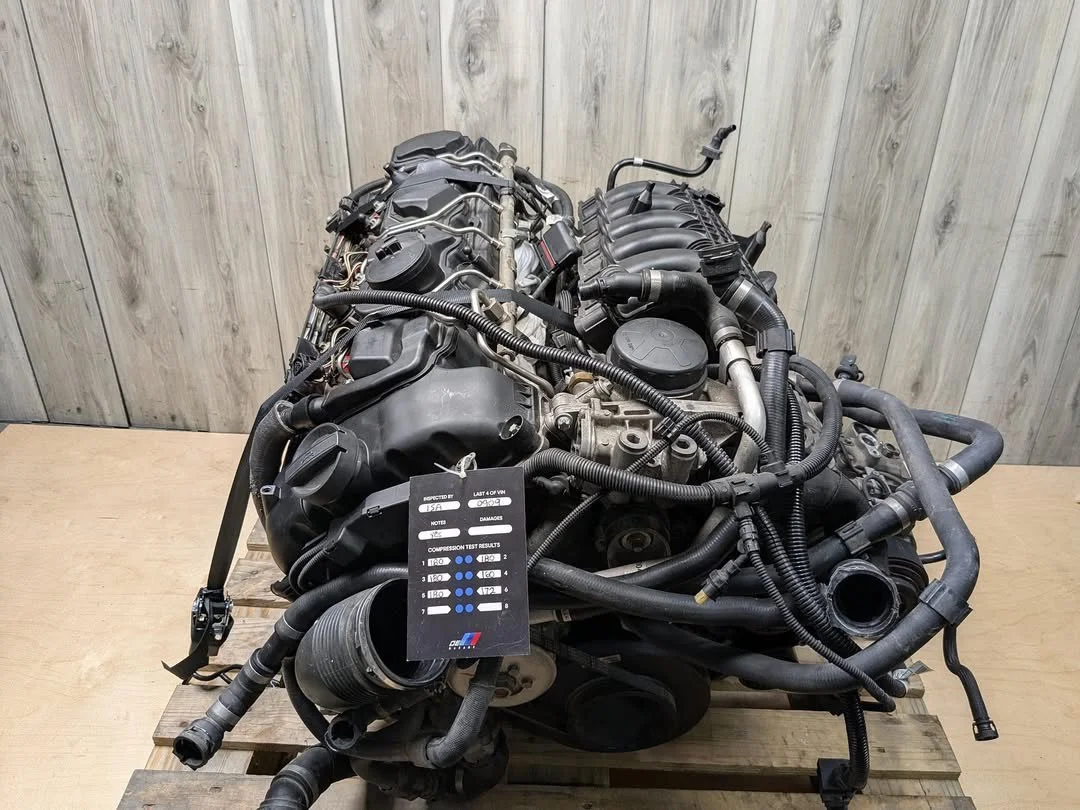
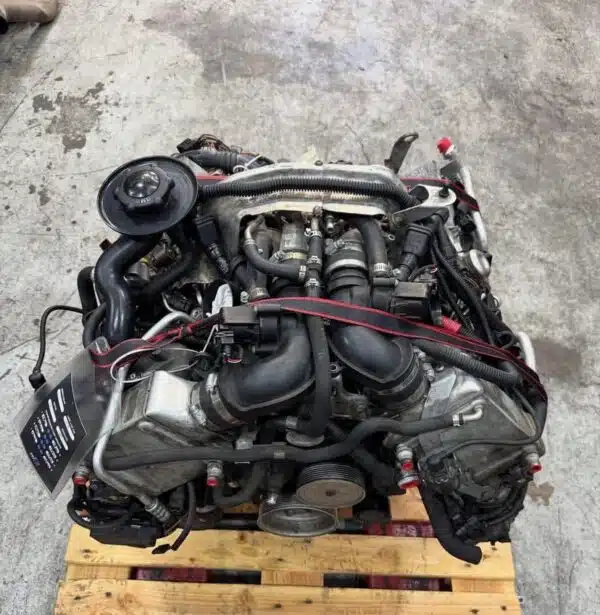
These photos are the products, taken with the engine. The shore pictures stay for the room around them.
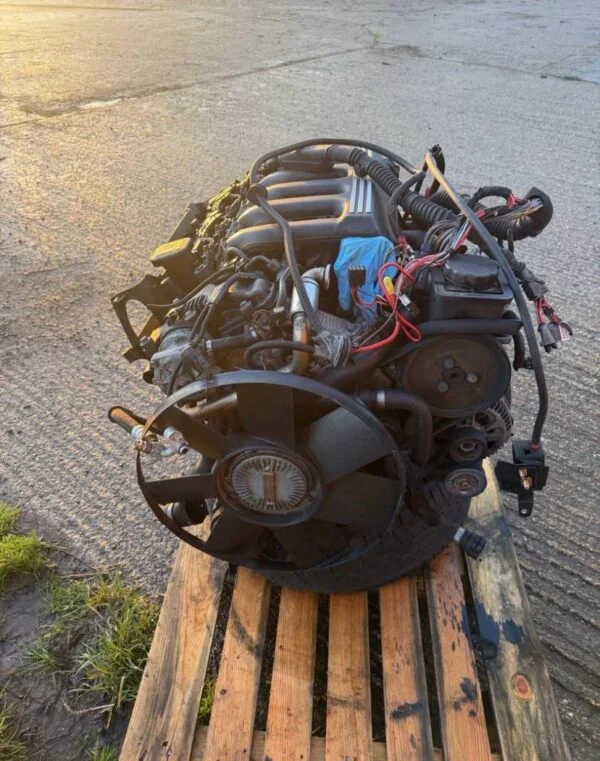

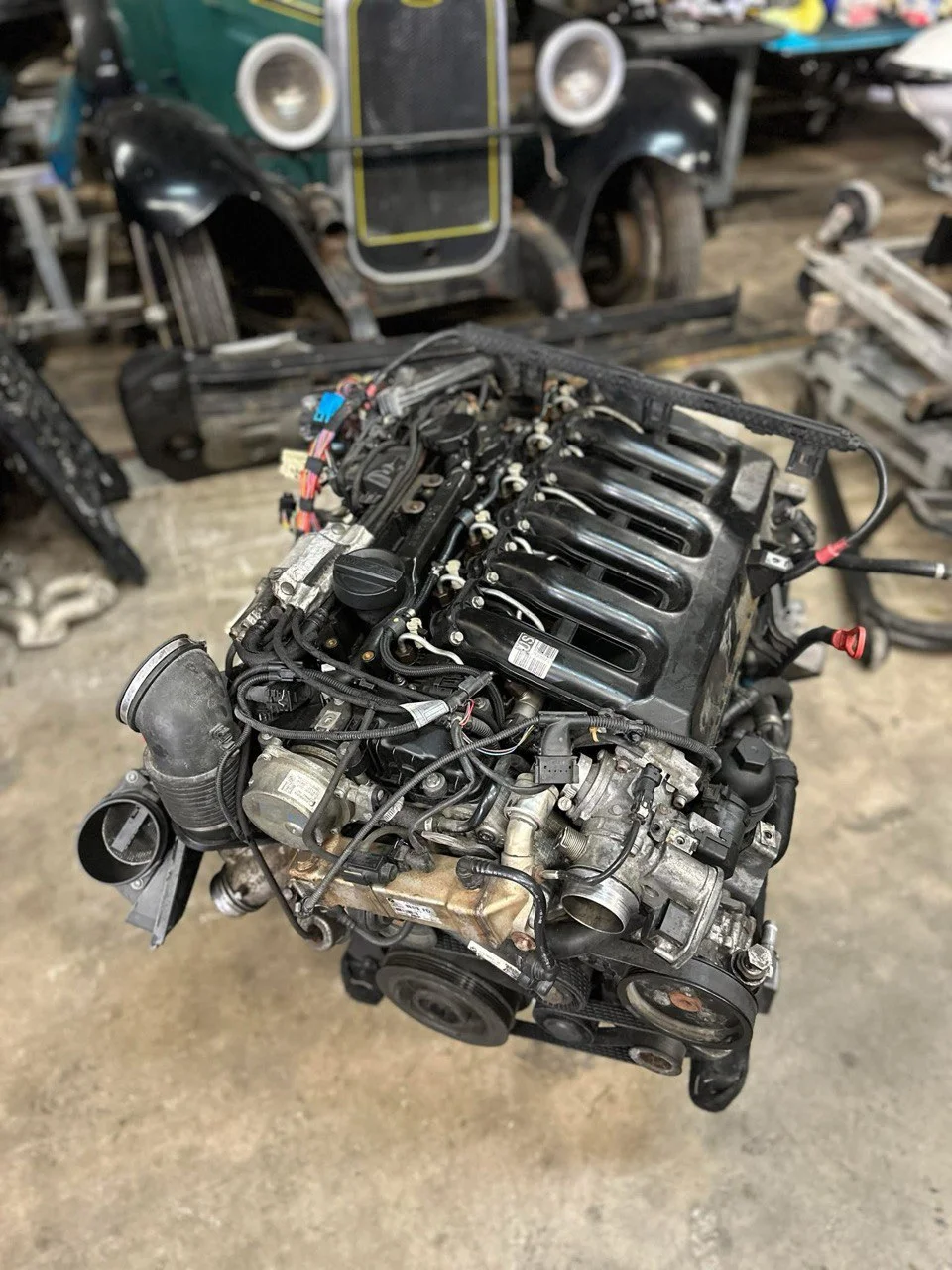

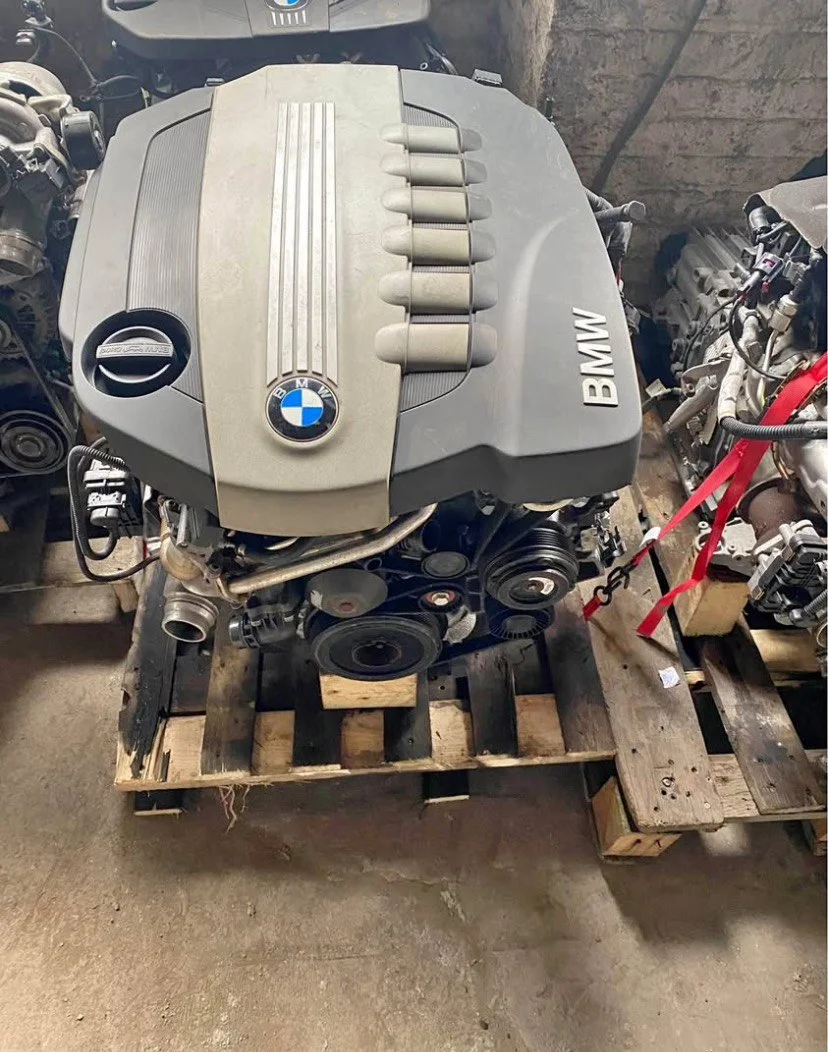
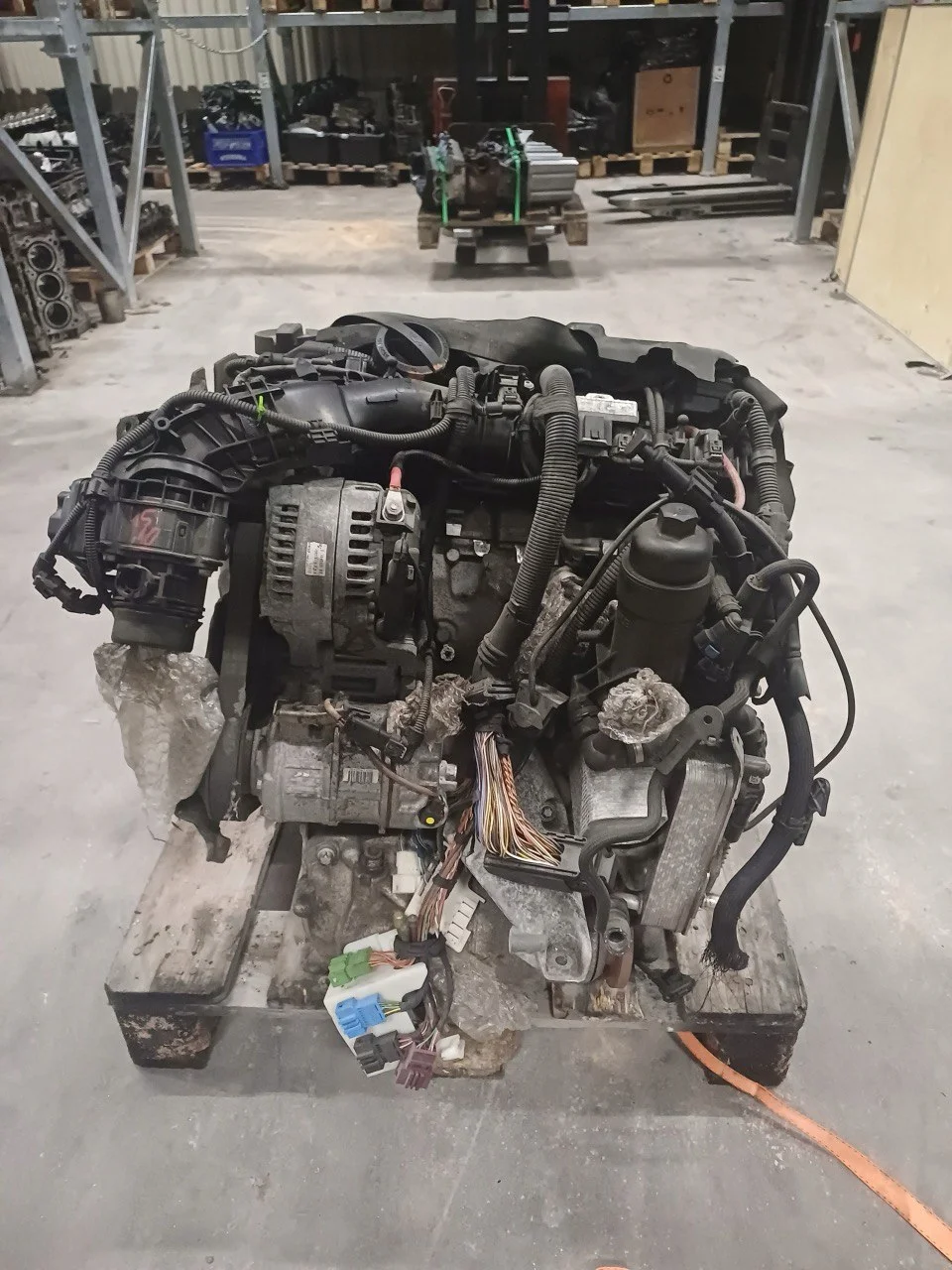
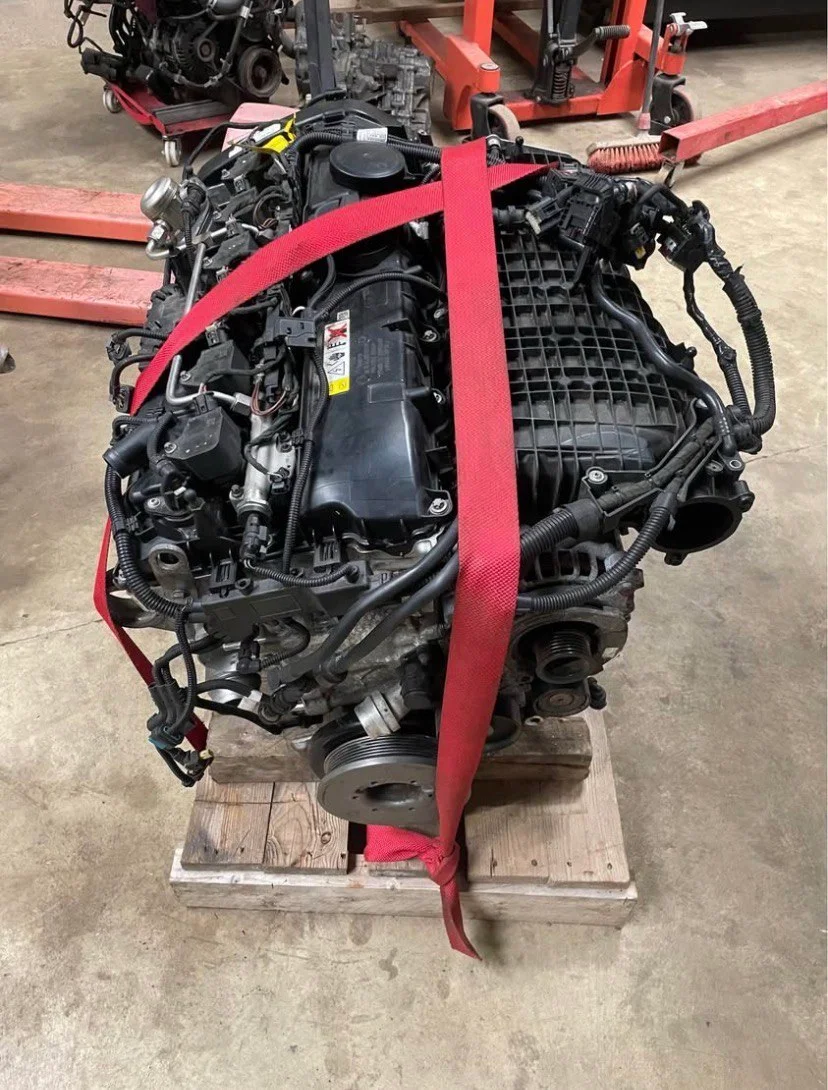
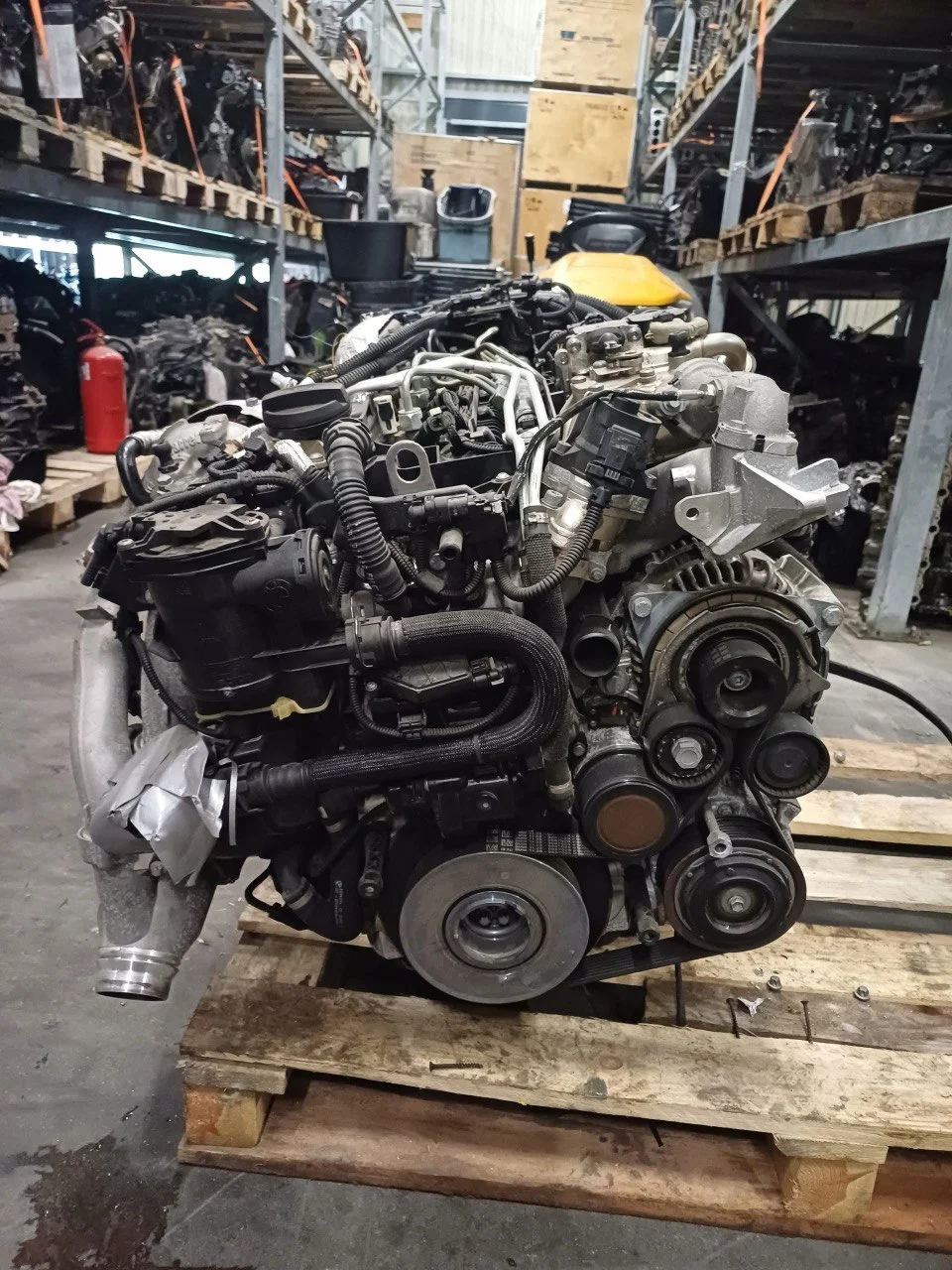
Product reel
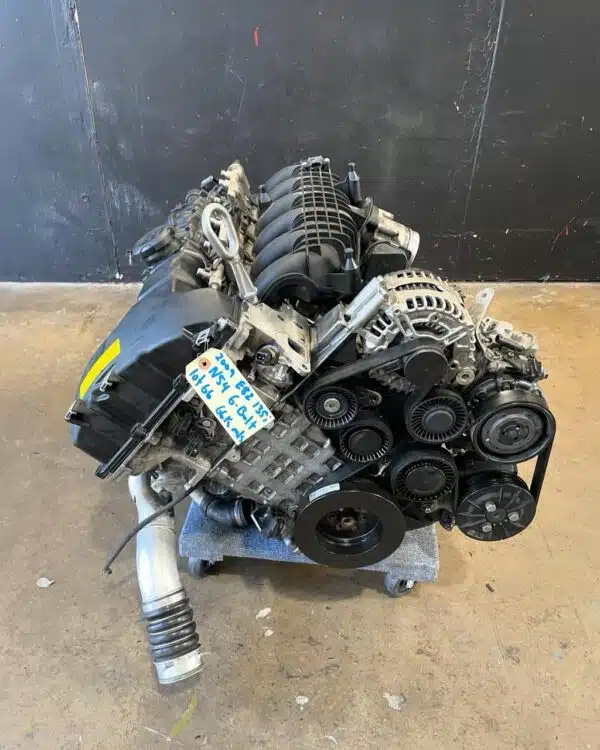
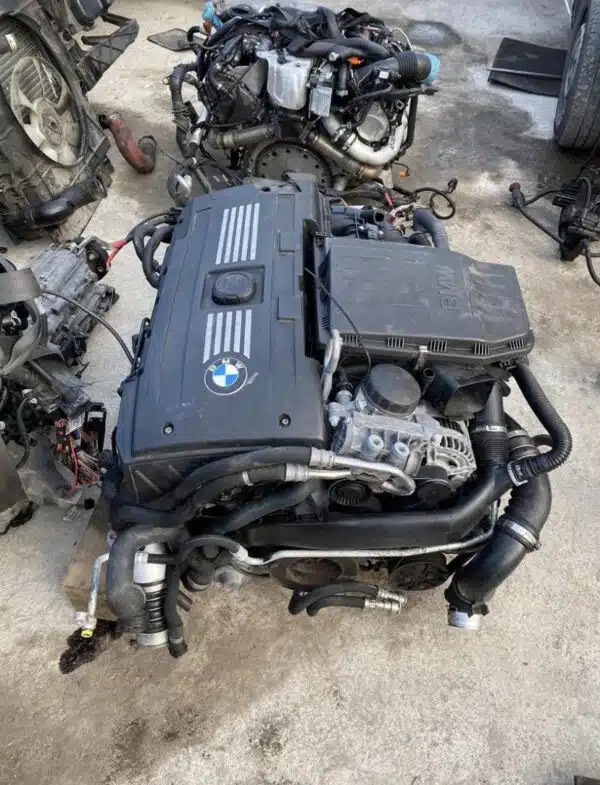

Product showcase
N55
A real petrol six from the shelf. The price is the engine. Send the VIN before you pay, so we know it fits your car.
4.000,00 € Ask about this engineThe code
Every engine on this shelf has a code. The code is a short name, like M57, N47, B58, or S63. Bayerische Motoren treats that name as more important than the badge on the car. Learn the shape of the name and the shelf becomes readable.
The first letter is the family era. M is the older generation. You will see M47 and M57 on diesels, and M54 on an older petrol six. N is the next generation: N47 and N57 for diesel, N54 and N55 for petrol sixes, N63 for a petrol V8. B is the newer modular generation: B47 and B57 for diesel, B38 and B48 for smaller petrol engines, B58 for the petrol six. S is the high-power branch used by M cars: S55, S58, S63, and others.
The numbers are a hint, not a full story. A 47 in a diesel name usually means a four-cylinder around two litres. A 57 usually means a six-cylinder around three litres. A 58 on a petrol is the modern three-litre six. A 63 is a V8. These hints help you sort the shelf. They do not replace the VIN. A hint can be right about the size and still be the wrong year of that size.
After the family name comes a longer code, such as N57D30A or B58B30. The extra letters and numbers mark a version: displacement, a technical update, or a power step. Two N57 engines can both be three-litre diesels and still differ in the turbo, the power, and the fittings. When we say yes to a VIN, we mean the version, not only the two or three letters on the card title.
TU in an older name means a technical update. M57D30 and M57D30TU are relatives, not twins. People who swap an M57 into a Defender care about this, because power and fittings changed across those updates. If you are buying for a BMW, the same rule holds. Update matters.
Do not trust a sticker that only says 320d, 330d, 530d, or 335i. Those are car names. The engine name is the letter code. A workshop that quotes you a job should be able to say the code. If they cannot, ask them to read it off the engine or off the VIN look-up before anyone buys parts.
On our cards, the short code is the heading and the longer story is in the match. Use the short code to browse. Use the VIN step to confirm the long code. That is the scheme: broad name first, exact name second.
If two cards look alike, read the code out loud. M57 and N57 sound similar and are not the same era. N55 and B58 are both petrol sixes and are not interchangeable because the badge feels close. S63 and N63 are both V8s, and the S is the hotter branch. Saying the letters slowly prevents the most common mix-up on this shelf.
What you get
The engine came out of a donor car. It has the block, the head, and the parts in the photos. We do not fit new pistons and call it new.
Defender swaps are here too: mounts, an adaptor, and a list of what is in the kit.
About this storeThe long block
Bayerische Motoren sells a used long block, unless a card says it is a kit. A long block is the heart of the engine as it left the donor car. It is not a rebuilt engine, and it is not a box of new parts with an old name.
Inside, you should expect the block itself, the cylinder head, the crankshaft, the pistons, the connecting rods, and the camshafts. These are the parts that make it a long block rather than a bare block. Valves live in the head. The photos on the card show the outside, so you can see the turbo, the manifolds, and the sensors that are still attached. If a part is in the photo, it is part of what we pack. If a part is not in the photo and not in the words, do not assume it is hidden in the crate.
What we do not do: we do not open the engine, fit new pistons, and call it rebuilt. A rebuild is a different product, with a different price and a different promise. If you need a rebuilt engine, this scheme of work is the wrong shop. We would rather say that plainly than dress a used engine in new language.
A short block is a smaller idea. It is the bottom end, without the head. We do not sell that as if it were complete. If you only needed a head, or only a turbo, say so. A long block is the heavy middle of the car, not a single spare.
Ancillary parts cause the most confusion. Alternators, power-steering pumps, air-conditioning compressors, and wiring looms may or may not travel with the engine. The rule is the photo and the sentence on the card. A loom that is not pictured is not a surprise gift. Ask before you pay if your workshop needs a named part.
For a normal BMW replacement, your workshop will move some parts from the old engine to the new one, or use the parts that arrived. That labour is their scheme of work, not ours. We are responsible for sending the unit we showed. They are responsible for fitting it to the car. Keep those two jobs separate so a delay in the workshop is not mistaken for a missing part in the crate.
Oil, filters, and coolant are workshop materials. They are not packed as a kit unless a card says so. A used engine should be filled and bled by the people who fit it, to their own standard. We do not ship an engine full of oil.
When the crate opens, compare three things with the page: the code, the photo, and the list of what was included. Do this before the engine is lifted into the car. The scheme of work asks for that look on day one. A problem found on day one is a store problem. A problem found after a long installation is much harder to see clearly.
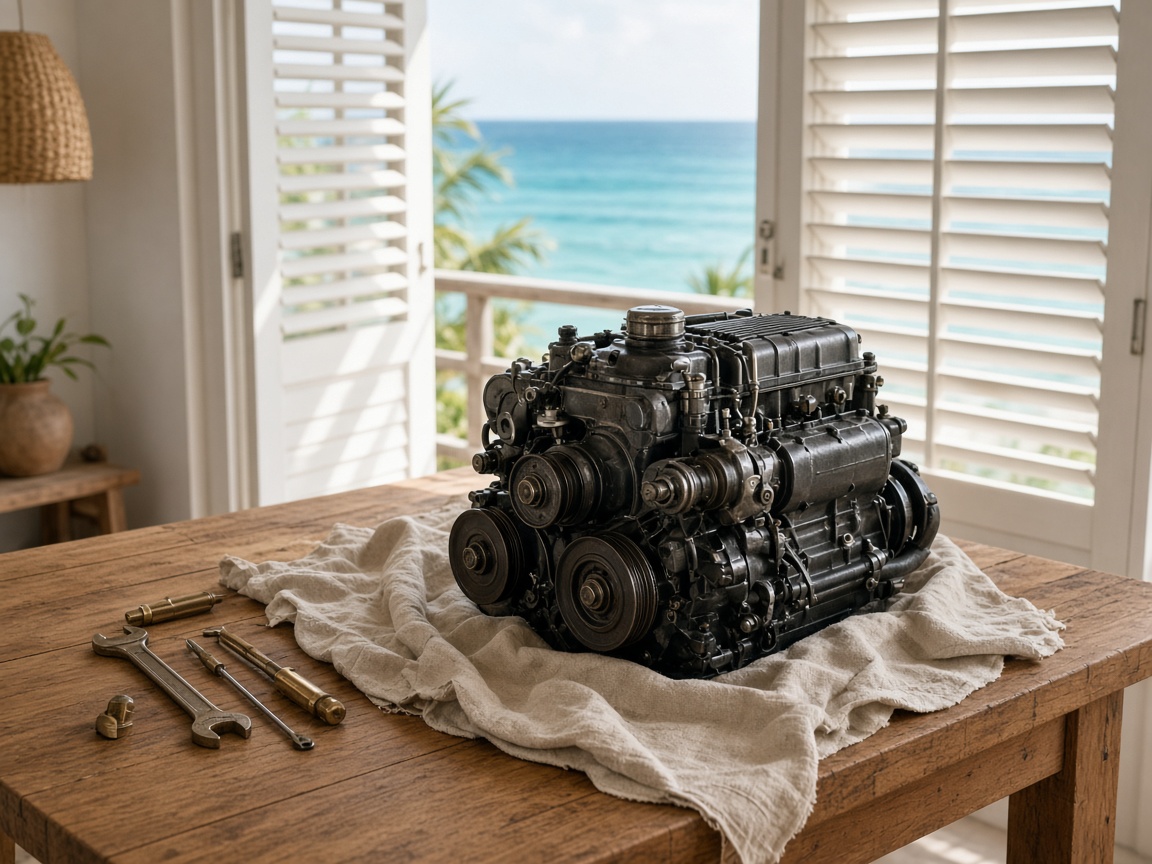
Buyer notes
The photo on the page was the engine in the crate.Lena, Kiel
They told me the code before I paid. That helped.Omar, Lyon
Plain words. No rush. The price did not change.Chris, Leeds
Diesel line
Most of the diesels people ask Bayerische Motoren for sit on one timeline. If you know the timeline, you know why a 320d from 2004 and a 320d from 2019 are not the same shopping job.
Start with the M generation. M47 is the older four-cylinder diesel. M57 is the older six-cylinder diesel. These engines lived in E46, E39, E60, and early X5 cars, among others. The M57 is also the engine many people choose for a Defender swap, which is a different scheme and has its own section below. On a BMW, an M57 is simply the strong older six.
Next came the N generation. N47 replaced the four-cylinder idea. N57 replaced the six-cylinder idea. You meet N47 in 118d, 320d, and 520d cars of that era, and N57 in 330d, 530d, and X5 30d cars. They are not updates you can ignore. Mounts, turbos, and electronics changed. An M57 card cannot fill an N57 car just because both are diesels with six cylinders.
Then came the B generation, the modular family. B47 took the place of N47. B57 took the place of N57. You see them in later F and G chassis cars, such as a G20 320d or a G30 530d. The letter B is the clue that you are in the newer scheme. People sometimes say the car feels the same as the one they had before. The engine name still changed.
There is also a smaller diesel, B37, a three-cylinder used in some small BMWs and MINIs. It is easy to overlook because the famous names are the fours and sixes. If your car is a small diesel, do not assume it is a B47. The VIN will say.
Older still, you may see M21, M41, and M51. These are earlier diesels. They belong to older cars. They are on the shelf when we have them, and they follow the same rule: code first, badge second.
Within one family, power steps matter. An N57 can be a calmer tune or a stronger one. The card may show the version. The VIN confirms it. Buying the stronger engine for a calmer car, or the other way around, can mean the wrong turbo, the wrong map, or the wrong fittings. This is why step three of the scheme exists.
How to use this timeline when you shop. Find your car’s years. Place it in M, then N, then B. Read only the cards in that band. Then send the VIN. The timeline gets you to the right aisle. The VIN picks the engine off the shelf. Bayerische Motoren would rather you read this once than browse the whole store in confusion.
A last diesel note. Four-cylinder and six-cylinder diesels are not steps on a ladder of the same engine. N47 does not grow into N57. B47 does not grow into B57. They are parallel families that share an era. If your car is a four, stay in the four aisle even when a six is cheaper that week. Price is not a reason to change cylinder count. The scheme of work would rather you leave with no engine than with a handsome engine for a different car.
Families
 Diesel · M57 N47 N57 B47 B57
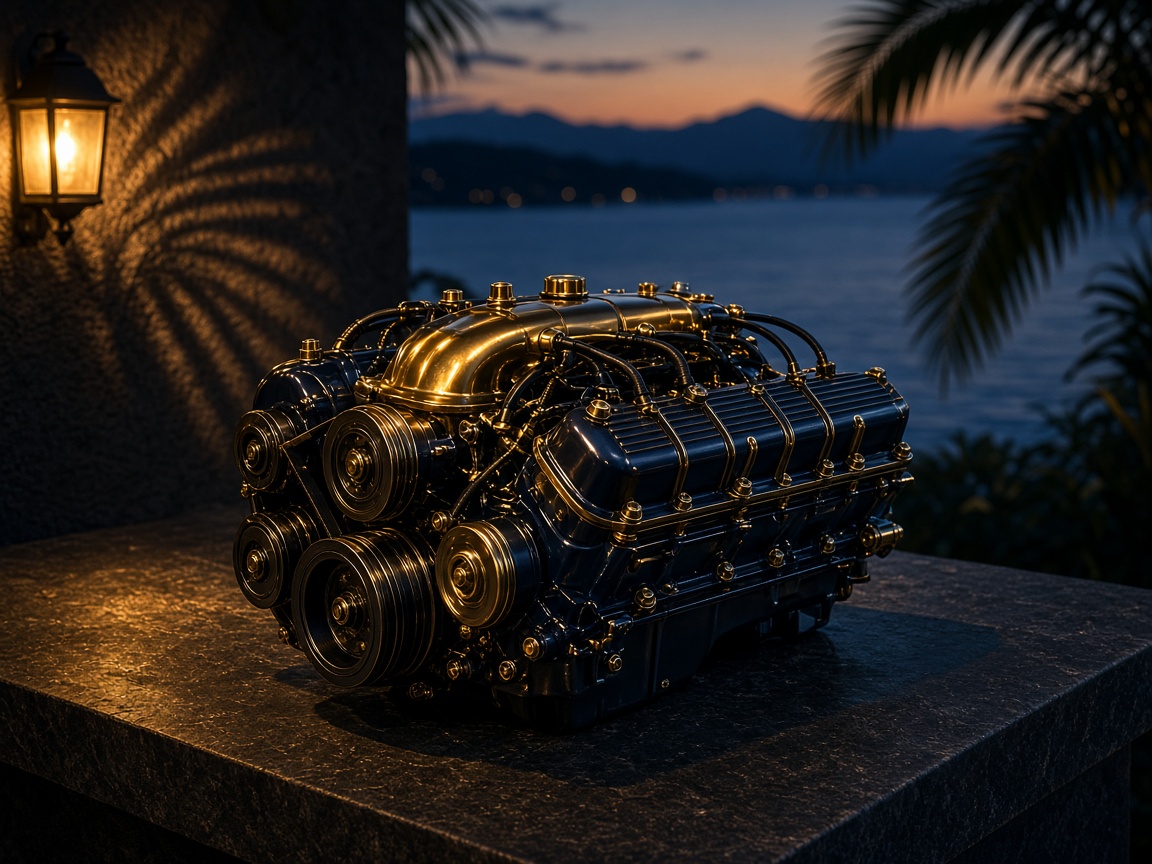 V8 · N63 S63 S68
 Older codes · M20 M50 M54
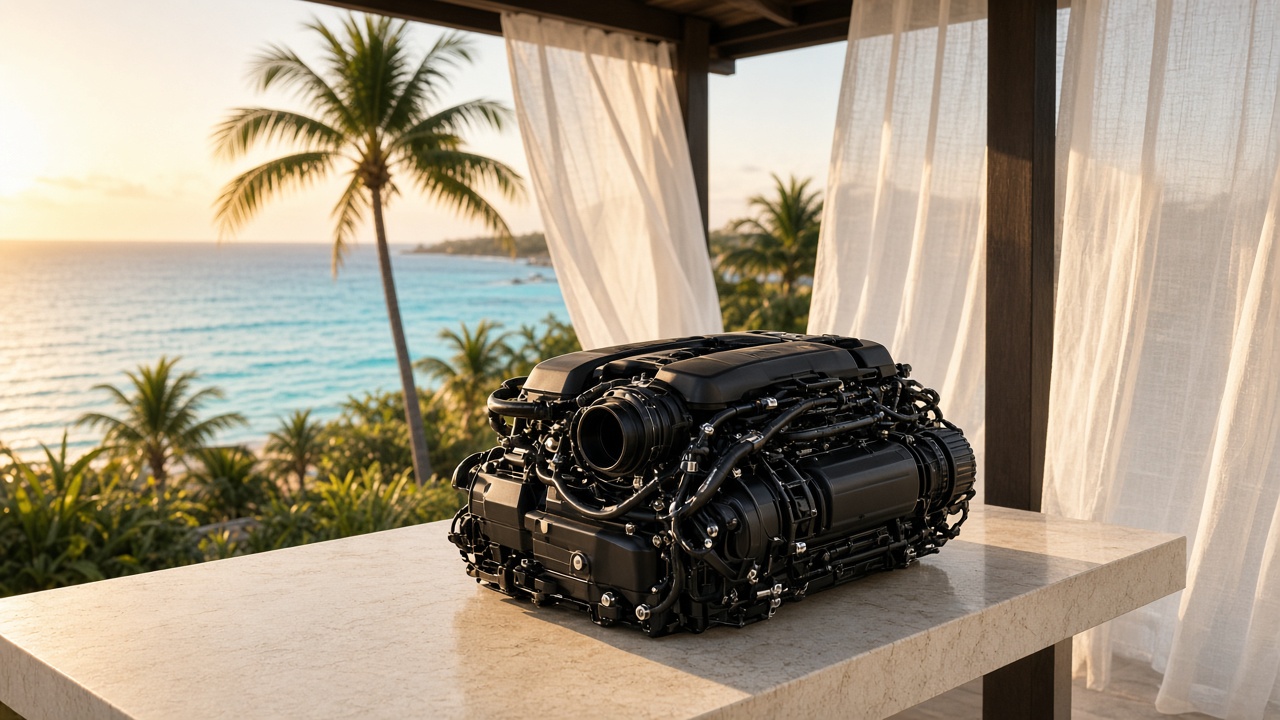 Defender kits · mounts and adaptors
Petrol line
Petrol engines on this shelf follow their own timeline. Do not use the diesel letters as a map. A B47 is a diesel. A B48 is a petrol. The number is close. The fuel is not. Bayerische Motoren keeps them in separate sentences for that reason.
The famous sixes start, for many buyers, with N54 and N55. N54 is the earlier turbo six, often with two turbos. N55 is the next six, arranged differently. Both can sit in cars that say 335i or 535i. They are not the same engine. If your car is one of those, the VIN is the only calm way to know which card to open.
B58 is the newer petrol six. You meet it in later 340i, 540i, and many X cars. It is modular, in the same broad era as B47 and B48, but it is petrol and it is a six. People like it because it is strong and smooth. Liking it is not a match. A B58 does not replace an N55 just because both are turbo sixes that feel modern.
Smaller petrol engines use other names. N20 and N26 are four-cylinder turbos from the previous era. B48 is the newer four. B38 is a three-cylinder. N43, N46, and N52 are older petrols you may still need for an older car. MINI adds W10 and W11 from earlier cars, and N14 or N18 on later ones. If the car is a MINI, say so. The scheme of work is the same, the aisle is different.
The V8 names to know are N63, and the S branches S63 and S68. N63 is the twin-turbo V8 used in larger BMWs. S63 is the hotter M version. They share a family feeling and they are not interchangeable by hope. S55 and S58 are sixes for M3 and M4 cars, not V8s. The letter S means a high-power branch. It does not tell you the cylinder count. Read the number too.
Older petrols still matter. M54 is a common six in E46 and E39 cars. M52 and M50 came before it. N62 is an older V8. If your car is from those years, do not shop only in the B58 aisle because that is the name you have seen online. Shop the era your car actually belongs to.
A simple study method: write fuel, then cylinder count, then era. Example: petrol, six, N generation. That phrase should match the card before you fall in love with the photo. Then the VIN checks the version. This is the same scheme as the diesel line, with a different alphabet.
Prices sit higher on many petrol sixes and V8s because the engines are newer or larger. A higher price is not a sign that the scheme changes. You still look, match, hear the shipping fee, and only then pay. The photo still has to be the unit in the crate.
One more petrol caution. Turbo hardware is not a shopping shortcut. People hear twin turbo or single turbo and think that phrase is the whole engine. It is one feature. The family letter, the cylinder count, and the VIN still come first. A twin-turbo V8 and a twin-turbo six are not neighbours you can swap because the phrase matched. Say the full code, then send the VIN, then look at the photo again.

The slow pass
This picture moves left to right on its own. You still read the same plain point: the crate is the engine you saw on the page.
Bayerische Motoren does not swap the unit after you say yes.
Same badge
This is the lesson that saves the most money. BMW kept badge names for many years. The badge is a promise about the car’s place in the range. It is not a promise that the engine stayed the same. Bayerische Motoren asks for a VIN because of this fact, not because we enjoy extra typing.
Take 320d. Across E46, E90, F30, and G20 you can find M47, N47, and B47, depending on the year and the build. All of those cars can say 320d. None of that means one engine card serves all of them. A buyer who searches only the badge will collect three different engines and think the store is being fussy. The store is being exact.
Take 330d and 530d. The six-cylinder diesel moved from M57 to N57 to B57. Power and fittings moved with it. A later car can look like a calm update of an earlier car. Under the badge, the scheme of the engine changed. Your workshop’s old notes from a previous 530d may describe a different animal.
Take 335i. N54 and N55 both wore that badge in different years. One familiar story is two turbos, then one. You do not need to memorise the hardware. You need to refuse a card that only says 335i and does not say N54 or N55. If the card says the code and the VIN agrees, you are inside the scheme. If the card hides the code, leave the card.
X5 is a whole shelf, not an engine. E53, E70, F15, and G05 used different diesels and petrols. Saying you have an X5 is like saying you have a house. It does not say which room. Add the chassis code if you know it, and always add the VIN.
How to shop without getting lost. Ignore the badge for five minutes. Write the year. Write the chassis if you know it, such as F10 or G30. Write the fuel. Then browse only that band. When a card looks right, send the VIN before you imagine the engine in the car. Imagination is not a step in the scheme of work.
Workshops sometimes order by badge because that is how the customer speaks. A good workshop will still ask for the VIN before it commits. If yours will not, you can still follow the scheme yourself and hand them the code we confirm. You are allowed to be the person who slows the job down until the name is right.
The same rule protects swaps and kits. A Defender is not a badge that means one M57. Power, update, and gearbox change the kit. We treat that as another branch of the same lesson: one nickname, many engines. The next section walks that branch.
If you are helping a friend buy, ask them for the VIN before you forward a link. A link to a pretty card is how the badge mistake spreads. A VIN in the same message is how the scheme of work stays intact. Bayerische Motoren can answer a yes or no from that pair, the link and the digits, faster than we can answer from a badge and a hope.
Second lane

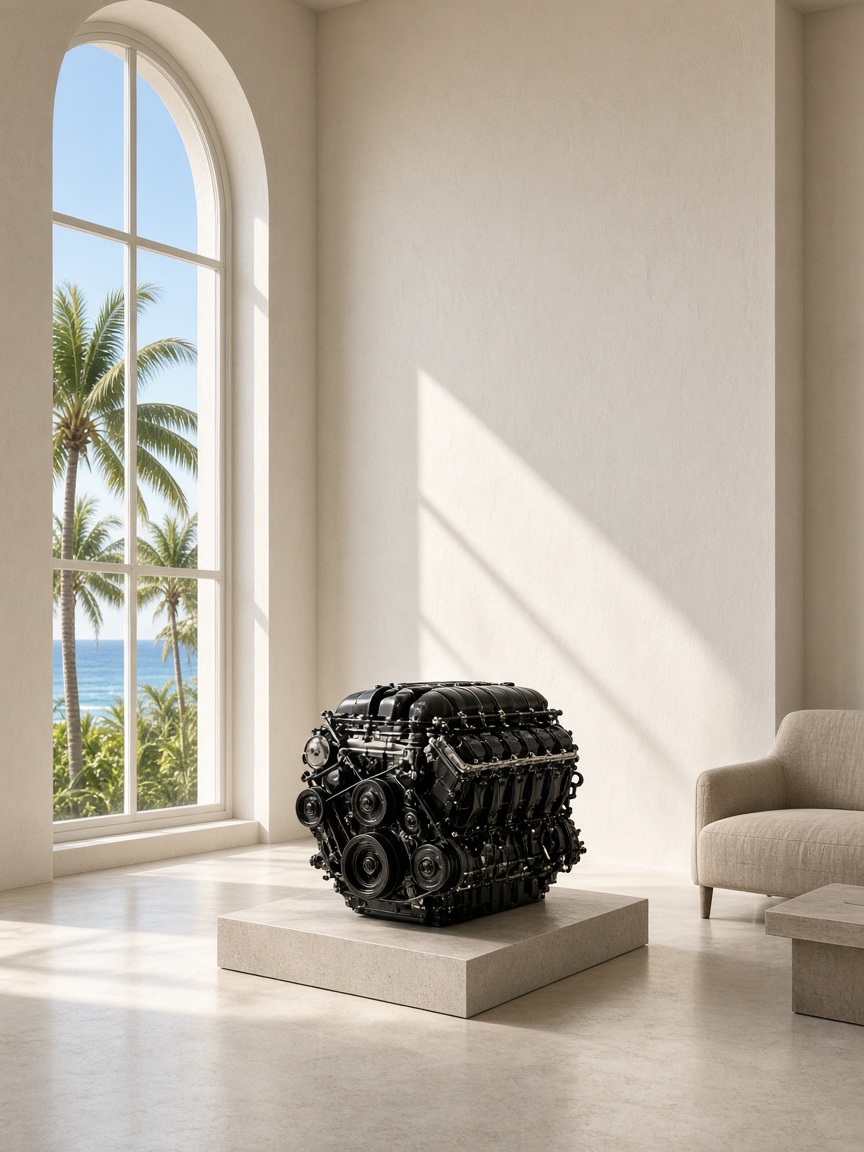

Bayerische Motoren
The shore moves behind the words. The promise does not.
Defender scheme
Some buyers are not replacing a BMW engine with the same BMW engine. They want an M57 diesel in a Land Rover Defender. Bayerische Motoren treats that as its own scheme of work. The engine can be right and the kit can still be wrong if the order of choices is skipped.
Choice one is the Defender itself. A 90, a 110, a 130, and a 127 are not the same body. Length changes what has to fit. Say which one you have before you choose a kit. A photo of a Defender in a field is not a chassis name. Write 90 or 110 in words.
Choice two is the M57 version. The family includes calmer and stronger tunes, and technical updates often marked TU or TU2. Power figures you will hear are roughly the 163, 184, 193, 204, 218, 231, 272, and 286 horsepower steps, depending on the exact engine. You do not need to chase the highest number. You need the version your kit and your use actually call for. More power is not a better scheme if the rest of the kit was drawn for a calmer engine.
Choice three is the gearbox you will keep or the gearbox you will add. Common names in this work are the R380, a ZF automatic, a GM automatic, and a Getrag box from a donor. The adaptor and the clutch story follow this choice. Pick the gearbox before you pick the adaptor. The other way around builds a pile of parts that do not meet.
Choice four is left-hand or right-hand drive. It changes the space around the engine and the path of some parts. Say it early. It is a small sentence that prevents a large mistake.
Choice five is how complete the kit should be. A long block is only the engine. A fuller kit can add mounts, a sump for the conversion, an adaptor plate, a loom and ECU plan, a clutch and flywheel, and a written list. The fullest kits include a gearbox as well. Each step up is more of the scheme done on paper before the crate, and a higher price. Buy the level you understand. Do not buy the longest list if you cannot say what each line is for.
The order, again: body, M57 version, gearbox, driving side, kit level. Then the price, then payment, then the crate. We do not start by selling you an adaptor and hoping the engine appears later. The engine and the kit are chosen together.
This page is the scheme, not a fitting manual. Bolting an engine into a Defender is workshop work, with its own measurements and its own risks. We are responsible for sending the parts the card names. Your workshop is responsible for the fit. If you do not have a workshop that has done this job, solve that before you pay for the heaviest kit.
When the crate arrives, check the list against the parts on the floor before anything is modified. A missing adaptor is obvious on day one and muddy on day ten. The scheme of work ends, for us, when the agreed parts are in your hands and they match the page.

The path
The photo is the engine. Not a sample from another car.
Seventeen digits. We say if this engine fits that car.


The engine price is on the card. Shipping is named before you pay.
Strapped to a pallet. A tracking note follows.
Before the crate
Packing is not the first step. It is a late step. Bayerische Motoren only moves an engine to the crate when the earlier steps of the scheme are finished. This section is the gate between a yes and a pallet.
The match must be written down. That means the VIN you sent, the code we agreed, and the card you chose all name the same engine. If any one of those three is still vague, the engine stays where it is. A busy day is not a reason to ship a maybe.
The photo must still be the unit. Engines can sit on a shelf while a buyer decides. Before the crate, we look again. The unit going in is the unit you were shown. If that unit is no longer the one available, we say so and we stop. We do not quietly substitute a cousin of the same code.
The include-list must be boringly clear. Long block, or long block plus the parts in the photos, or a Defender kit with named lines. Whoever packs the crate should be able to point at the list and point at the parts. If they cannot, the list is rewritten before the straps go on. A strap is not a substitute for a sentence.
The shipping fee must already have been said. The scheme does not allow the fee to be invented at the depot door. You should have heard it, and you should have had the chance to say no. No is allowed. An engine can go back to the shelf.
Payment sits in this gate as well. We pack when the agreed money is in place, not before, and not in exchange for a foggy promise. If you are waiting on a workshop to confirm they can fit the engine, wait. A crate in a yard is a worse place to change your mind than a card on a screen.
The physical pack is simple on purpose. The engine is wrapped so it does not travel bare. It is strapped to a pallet so a forklift can lift it. Sharp or loose pieces are not left as a surprise for the driver. You will get a tracking note so the journey is not a rumour.
What we do not pretend: we do not claim a laboratory rebuild, and we do not claim the engine is new. A used engine has a past. The scheme’s honesty is to show that past in photos and in the code, and to refuse a sale that does not match the car. The crate is only the last honest step.
If you are the person receiving it, your first job is not to start the installation. Your first job is to open, look, and compare. Code, photo, list. Then the workshop scheme begins. Two schemes, in order. Mixing them is how good engines and good workshops end up arguing.
Prices in motion
from 1.180 €
from 980 €
from 2.150 €
from 3.400 €
from 4.200 €
from 2.600 €
from 1.180 €
from 980 €
from 2.150 €
from 3.400 €
from 4.200 €
from 2.600 €
In the room
Money and after
Money is a late step in the Bayerische Motoren scheme of work. It comes after the look, after the VIN, and after the shipping number. If you remember only one thing from this section, remember the place of payment. It is not a deposit to start a search. The search is already done.
The engine price is the number on the card, in euro. It is not a starting bid. Shipping is extra and it is said in words before you pay. Add them. That sum is what you are agreeing to. A workshop’s labour is a third cost, and it is theirs, not ours. Do not fold their hours into our price, and do not ask our price to include a job we are not doing.
Pay only when you can say the code out loud and you know it matches the VIN. If you cannot say it, you are not ready, even if the photo is beautiful. Beauty is not a step in the scheme. The code is.
After payment, the crate follows the packing gate in the previous section. You receive a tracking note. Use it. A silent week is a reason to ask, not a reason to assume the worst or the best. The journey is door to door on the usual roads: Europe, the UK, and the USA. Farther places are a question you ask before you pay, not after.
On arrival, look before you fit. This is still our scheme, for one short moment. Compare the engine with the page. If it matches, the workshop scheme starts, and our shipping scheme is complete. If it does not match, stop and tell us before parts are modified or the engine is mounted. A clear day-one note is the useful note.
Warranty, when a card or a reply says you have one, is up to twelve months and only on the terms we actually state for that engine. It is not a promise that a used engine has no past, and it is not a promise that covers a wrong installation or a wrong car. Read the sentence we give you for that unit. A warranty that is not written down is not a warranty.
What sits outside the warranty in any honest scheme: damage from a bad fit, missing oil, a car the VIN did not describe, and parts we never said were included. What sits inside, when we have said so, is a fault in the long block you were sold, found in the agreed time, and reported before the story gets muddy.
If you are unsure, ask one question at a time. Does this code match this VIN. What is the shipping number. What is in the crate. Is there a written warranty on this unit. Those four questions are the whole money section of the scheme. Bayerische Motoren would rather answer them slowly than rush a payment.
Then the page can end. You have the order of work: look, match, price, pay, crate, check, and only then the workshop. The photos can keep moving. The order should not.
Ask in one line
Send the VIN. We answer before money moves.
No. It is used. The photos are the proof.
After the fee is clear and the crate is shut.
Stories

Two cars can wear the same badge and still need different engines. The VIN is the short way to know.
You get a used long block, not a rebuilt engine. The photos are the parts that ship.
We wrap it, strap it to a pallet, and send a tracking note. You know the fee first.
Bayerische Motoren · M57 · N47 · N57 · B47 · B57 · B58 · N54 · N55 · N63 · S55 · S58 · S63 · Defender kits ·
Bayerische Motoren · M57 · N47 · N57 · B47 · B57 · B58 · N54 · N55 · N63 · S55 · S58 · S63 · Defender kits ·

